
Reviewed · WALKING TOURS
Kotor: Guided Walking Tour of the Old Town
Kotor’s walls tell stories at every turn. This two-hour private walking tour gives you a clear route through the medieval Old Town, from the Sea Gate to the Clock Tower, palaces, churches, and northern walls. I like the focused length and the chance to ask your own questions rather than follow a large crowd.
I also like the guide’s wider view of Kotor. Jovana, who led one recent visit, explained not only the city’s past but also everyday life in Montenegro and regional politics in an approachable way. The main consideration is physical: you will spend two hours walking and standing on foot, so this is not a gentle sit-down introduction.
In This Review
- Key points about this Kotor walking tour
- Starting at Kotor’s Sea Gate
- Square of Arms and the Clock Tower
- Flour Square and two old palaces
- Thirty minutes at St. Tryphon Cathedral
- Boka Navy Square and the smaller churches
- Blessed Ozana, the Northern Gate, and the Skurda River
- Mountain and bay views without a long hike
- Stories, legends, and modern Montenegro
- Is $141 per person good value?
- Who should book this two-hour walk?
- Practical details before you go
- Should you book the Kotor Old Town tour?
- FAQ
- How long does the Kotor Old Town walking tour last?
- Where does the tour meet?
- What sights are included?
- Is the tour private?
- Which languages are available?
- Are admission tickets included?
- Can I cancel the booking?
Key points about this Kotor walking tour
- The Sea Gate meeting point: Find the stone object in front of Kotor’s main Old Town entrance.
- A compact route: See the Clock Tower, palaces, churches, squares, city walls, and Citadel area in two hours.
- St. Tryphon Cathedral: Allow about 30 minutes for the cathedral portion, one of the tour’s main stops.
- Private format: Your group receives a live guide rather than joining a large shared party.
- Five language choices: Guides are available in English, Italian, French, Russian, and German.
- Useful flexibility: The tour can be adjusted for a larger group or a different starting point by arrangement.
Starting at Kotor’s Sea Gate
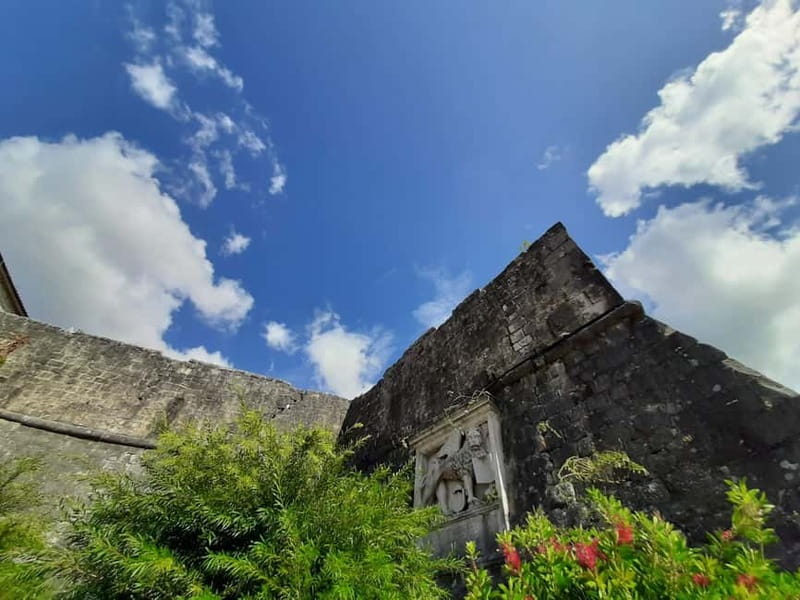
Your walk begins at the main entrance to the Old Town, known as the Sea Gate. The stated meeting point is a stone object in front of the gate, while the starting location is also identified as the Tourist Information Office. I would check the precise marker before setting off, especially if Kotor is busy or several cruise groups are arriving at once.
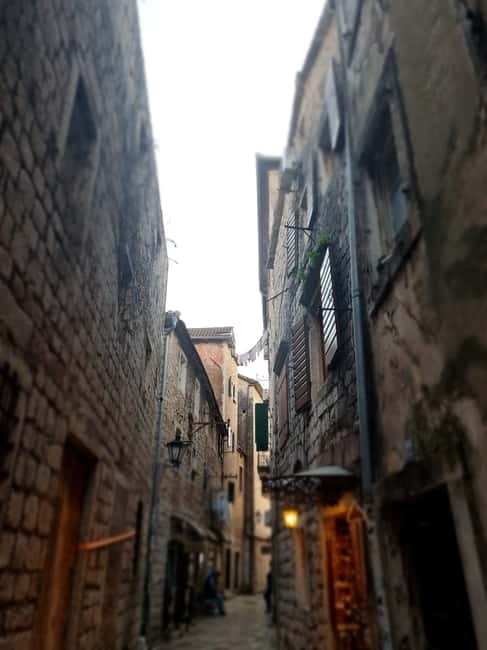
This is a sensible place to begin. The gate puts you straight into the historic center, with no need for transport or a long transfer from outside town. Once you pass through, the streets narrow quickly and the modern waterfront feel gives way to old stone buildings, enclosed squares, and a route shaped by centuries of defense and trade.
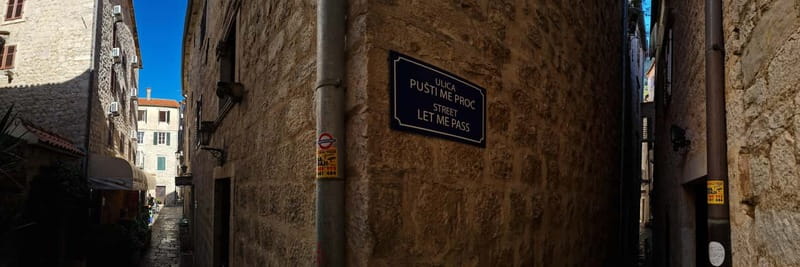
Your guide provides the orientation that a map cannot. Kotor can feel like a maze at first, and the short lanes do not always reveal where they lead. A local guide helps connect the buildings to one another, so the walk becomes more than a parade of attractive walls.
The tour is private, which matters here. In a tight medieval town, a small group can stop without blocking the lane and can hear the guide more easily. You can also ask about a particular church, family, legend, or building instead of waiting for a standard script to finish.
More guided walks in Kotor:
- Kotor Old Town Walking Tour
★ 5.0 · 357 reviews - Private Walking tour with Wine and Food
★ 5.0 · 197 reviews - Kotor: Old Town Walking Tour
★ 4.8 · 167 reviews
Square of Arms and the Clock Tower
The first major stop is the Square of Arms, with about 15 minutes set aside for it. This is one of the best places to get your bearings in the Old Town because several routes meet here and the square introduces Kotor’s civic side.
Look closely at the buildings around you rather than rushing toward the next sight. The value of this stop is the explanation of how public spaces worked in a walled town. Your guide can give the square a human scale, pointing out details that may otherwise blend into the surrounding stone.
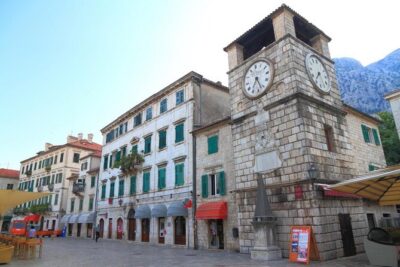
The Clock Tower is among the principal sights along this part of the route. It is an easy landmark to recognize, but a guide adds context about its place in Kotor’s public life and town design. I find this kind of short stop useful early in a visit because it helps you recognize the Old Town’s key points when you return on your own.
The 15-minute timing suggests a brisk introduction rather than a long historical lecture. That is good if you want to cover a lot of Kotor in one outing, but you should not expect every building in the square to receive equal attention. If you have a special interest in architecture, ask your guide early so the private format can work in your favor.
Flour Square and two old palaces
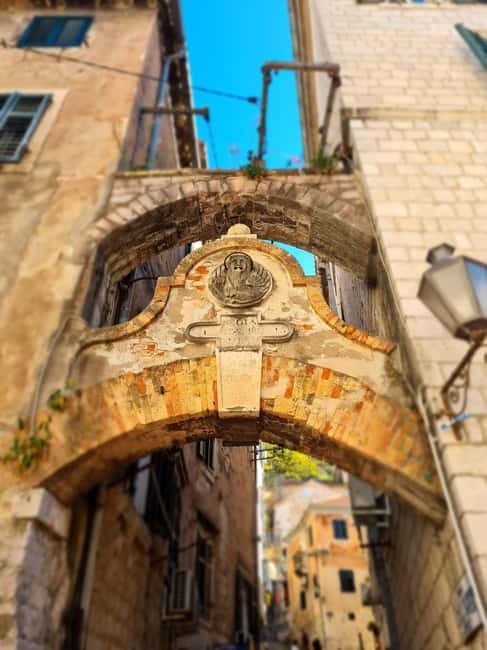
The next named stop is Flour Square, also planned for about 15 minutes. Here you see Pima Palace and Buca Palace, two buildings that help explain the influence of wealthy families in Kotor.
The square is valuable because it shifts the focus from public space to private power. Palaces in a compact town tell you how status was displayed when there was little room to build outward. Their placement, facades, and relationship to the square are part of the story.
This is also a good place to listen for the less polished side of Kotor’s past. The walk is not limited to dates and rulers. The guide is expected to share old stories and legends connected with the walls, and the best questions may be the simple ones: who lived here, how did families gain influence, and what did daily life look like behind these facades?
Do not expect to enter every palace. The route identifies visits to the squares and sights, but it does not promise interior access to each building. The architectural detail is still worthwhile from outside, especially when the guide explains what you are seeing.
Thirty minutes at St. Tryphon Cathedral
St. Tryphon Cathedral receives the longest named stop, about 30 minutes. That timing tells you something about its importance to the walk. It is not just a quick photograph from the street.
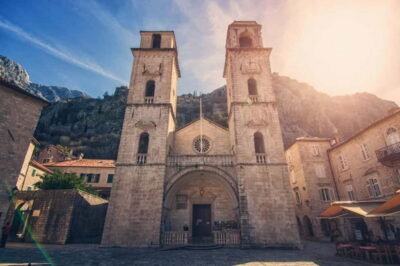
The cathedral gives the tour a strong central point. Its presence helps explain Kotor’s religious life and the way major churches shaped the town around them. Your guide can also connect the cathedral to the broader story of Kotor, rather than treating it as an isolated monument.
I would use this part of the tour to ask questions. The private setting gives you a better chance to pause over details that interest you, while the guide can explain the cathedral’s place in the Old Town’s story. Admission tickets are included, although the supplied information does not specify every access condition inside the building.
The half-hour stop may feel long if you prefer to move quickly, particularly if you have already seen several churches on a Montenegro trip. For most first-time visitors, though, it gives the cathedral enough attention to feel meaningful rather than decorative.
A couple more Kotor trips worth weighing up
- Kotor: Swim in the Blue Cave + Lady of the Rocks Tour
★ 4.7 · 3,462 reviews - Kotor: Blue Cave, Submarine Base and Lady of the Rocks Tour
★ 4.9 · 2,869 reviews - Kotor: Blue Cave Swim Stop, Lady of the Rocks & Submarine Base
★ 5.0 · 1,914 reviews - From Dubrovnik: Montenegro Day Trip with Boat Cruise
★ 4.6 · 1,331 reviews
Boka Navy Square and the smaller churches
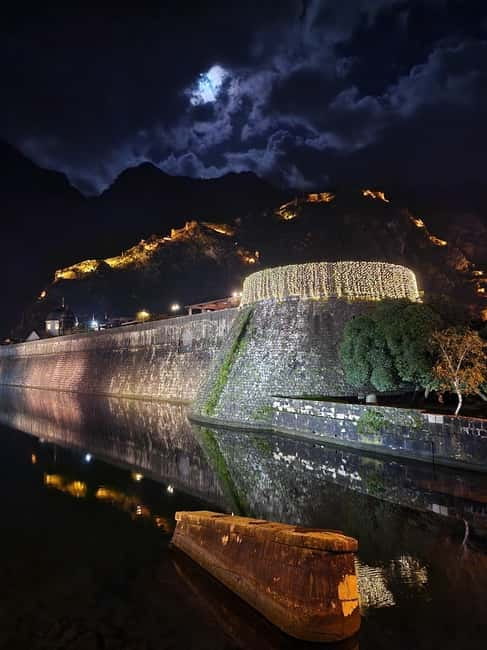
The route continues to Boka Navy Square, where you see the Karampana, then to St. Luke Square. The change from one square to another is part of the pleasure of Kotor. The town is compact, but each open space has a different role and mood.
Karampana is a useful detail because it brings the Old Town down to an everyday level. Not every memorable sight is a grand palace or cathedral. Features connected with water, work, and local routines help you picture how the town functioned for ordinary residents.
At St. Luke Square, the tour includes St. Luke Church and St. Nikola Church. Their smaller scale offers a contrast with St. Tryphon Cathedral. I like this part of the route because it keeps the walk from becoming a greatest-hits list of only the biggest monuments.
The guide’s stories matter here. Kotor’s legends are tied to its walls and religious buildings, and a local explanation can make a quiet square more engaging. Still, the exact amount of time at each church is not specified, so the pace may depend on your group’s questions and the guide’s route.
Blessed Ozana, the Northern Gate, and the Skurda River
Another stop is Blessed Ozana, followed by the Northern Gate and the Skurda River. This section takes you beyond the most obvious central squares and shows how Kotor’s defenses met the natural setting around the town.
The Northern Gate is especially useful for understanding Kotor’s position. The town sits in a small bay with high mountains around it, and its walls were not placed in a flat, open setting. The river, gates, and fortifications all make more sense once you see how tightly the town is pressed between water, rock, and defensive barriers.
The Skurda River also adds a different sound and edge to the walk. Instead of seeing Kotor only as a collection of old façades, you get a sense of the physical boundaries that shaped it. Your guide can tie those boundaries to stories about the town’s unusual location and the people who lived within them.
The route includes the city walls and the Citadel, though it does not promise a climb to the upper fortifications. That distinction matters. You should expect views and explanations connected with the walls, but not assume that this two-hour tour includes the strenuous ascent toward the mountain fortress.
Mountain and bay views without a long hike
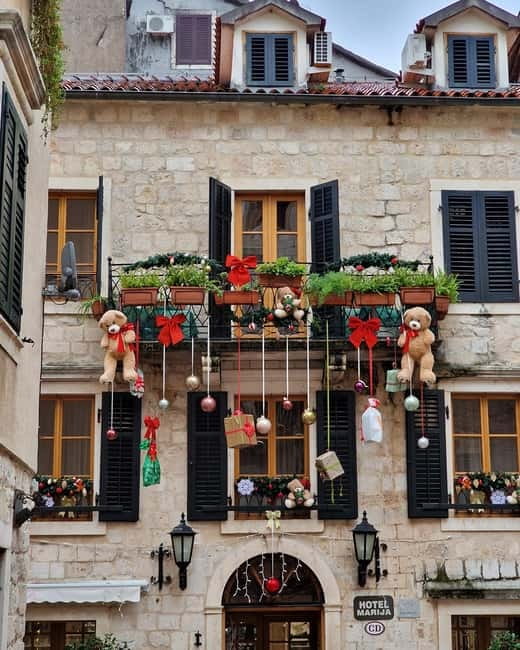
Kotor’s setting is one of the tour’s main rewards. As you move through the Old Town, you catch views toward the surrounding mountains and the sea. The scenery is not something you visit at one viewpoint and leave behind. It keeps appearing between gates, roofs, lanes, and walls.
You get these views without committing to a separate mountain hike. That makes the walk useful for a short stay, a first afternoon in Kotor, or a day when you want history without a demanding climb.
At the same time, this is still an active walking tour. The information specifically describes two hours of walking and standing. Narrow streets can make the route feel slower than the distance suggests, and historic paving may require attention underfoot. The activity is wheelchair accessible, but you should still confirm the practical route details for your needs because the Old Town includes old streets and defensive areas.
The tour is not suitable for people over 95 according to the activity information. That rule is blunt, but the larger point is useful: judge the experience by your ability to stand and walk for the full two hours.
Stories, legends, and modern Montenegro
The strongest personal detail connected with this experience comes from Jovana’s guiding style. She did more than present Kotor’s monuments. She also explained some of the daily life of Montenegrins and discussed regional geopolitics at a level her group could follow.
That is exactly the kind of guide you want in Kotor. Dates and architectural labels are useful, but they do not tell you how the town fits into present-day Montenegro. A guide who can move from old legends to modern life gives the walk more range.
You should not assume every guide will follow the same style or cover the same political topics. The available languages are English, Italian, French, Russian, and German, and the guide is live, so you can ask for the emphasis you want. If you are curious about local life, mention that at the beginning rather than waiting until the final minutes.
The stories also help with pacing. Two hours can feel short when the route includes so many names, but a good anecdote gives a square or gate a clear memory. Kotor is easier to remember when you attach a story to a place instead of trying to memorize a list of monuments.
Is $141 per person good value?
At $141 per person, this is not a budget orientation walk. The price makes the most sense for a private group that values personal attention, a guide in a preferred language, and a carefully arranged route through the main Old Town sights.
Admission tickets and the guide are included. Food, drinks, souvenirs, and personal expenses are not, although you do not need refreshments to complete the two-hour route. Since the walk begins and ends in the Old Town, there is also no stated transport cost or transfer time to add.
For one person or a couple, the price may feel high compared with a larger shared tour. For a family or group splitting the cost across several people, the private format can be more reasonable, especially if you want to customize the start or adjust the route for a larger party.
The value also depends on how much context you want. If you only need directions to the Clock Tower and cathedral, you can explore independently. If you want the palaces, churches, legends, local life, and town defenses explained in one compact visit, the price buys convenience and access to a live guide.
Who should book this two-hour walk?
I would choose this tour if you are visiting Kotor for the first time and want a strong overview before exploring on your own. It is also a good fit if you have limited time and want the main sights arranged in a sensible order.
The private format suits families, couples, and small groups with different interests. You can ask more questions than you normally would in a large party, and the route may be adjusted for a larger group or a different starting location.
It is less suitable if you want a long stop at every church, a serious fortress hike, or a slow architecture seminar. The route covers a lot, so some sights receive a short introduction. You also need to be comfortable walking and standing for two hours.
The tour has a 4.7 rating from two posted bookings, including a five-star visit led by Jovana and a four-star rating describing the experience as interesting. That is encouraging, but it is a small sample. I would put more weight on the clear route, private format, language choices, and physical demands than on the number alone.
Practical details before you go
Wear shoes that you can walk in comfortably for two hours. The experience is entirely a walking visit through the Old Town, with no food or drink included, so plan any refreshments before or after the tour.
Confirm the exact meeting marker. The instructions point to the stone object in front of the Sea Gate and also name the Tourist Information Office. Arriving at the main gate with a little extra time should make this easy to sort out.
The guide can conduct the tour in English, Italian, French, Russian, or German. The activity is wheelchair accessible, but because you will be on foot for the full route, contact the provider if you need to clarify how the specific streets and wall areas will be handled.
You can cancel up to 24 hours in advance for a full refund, and you can reserve now and pay later. Starting times vary, so check availability for the date you want.
Should you book the Kotor Old Town tour?
Book it if you want a private, efficient introduction to Kotor with more than monument names. The combination of the Sea Gate, Clock Tower, Flour Square, palaces, St. Tryphon Cathedral, smaller churches, river gate, walls, and Citadel area gives you a solid picture of the Old Town in two hours.
I especially like it for visitors who want a guide capable of connecting old stories with modern Montenegro. At $141 per person, it is best value for a group that will use the private format and ask questions. If you are watching every dollar or prefer to wander without a set pace, explore independently instead. For a first look at Kotor with a personal guide and built-in historical context, this is a sensible choice.
FAQ
How long does the Kotor Old Town walking tour last?
The tour lasts two hours. It involves walking and standing on foot throughout the experience.
Where does the tour meet?
The meeting point is a stone object in front of the Sea Gate, the main entrance to Kotor’s Old Town. The starting location is also identified as the Tourist Information Office, so confirm the exact marker when booking.
What sights are included?
The route includes the Square of Arms, Clock Tower, Flour Square, Pima Palace, Buca Palace, St. Tryphon Cathedral, Boka Navy Square, Karampana, St. Luke Square, St. Luke Church, St. Nikola Church, Blessed Ozana, the Northern Gate, the Skurda River, the city walls, and the Citadel area.
Is the tour private?
Yes. The activity is offered as a private group tour.
Which languages are available?
The guide can lead the tour in English, Italian, French, Russian, or German.
Are admission tickets included?
Yes. A guide and admission tickets are included. Food, drinks, souvenirs, and personal expenses are not included.
Can I cancel the booking?
You can cancel up to 24 hours in advance for a full refund. The reserve-now, pay-later option is also available.
Latest from Kotor
- Montenegro wine tasting (Private tour)★ 5.0 · 2 reviews
- Wild Beauty of Montenegro – Private Tour★ 5.0 · 3 reviews
- Transfer from Tivat airport to Kotor Old Town★ 5.0 · 2 reviews
- The Old Captain’s Smile Tour in Kotor★ 5.0 · 7 reviews
- Express Cable Car ascent & 25Turns Epic Bike Descent.★ 4.5 · 9 reviews
- Sveti Stefan, Budva and Kotor★ 4.5 · 6 reviews
- Tara River Rafting Full Day Trip from Kotor★ 5.0 · 2 reviews
- National park Skadar Lake (Private tour)★ 4.5 · 6 reviews
Walking Tours, compared.


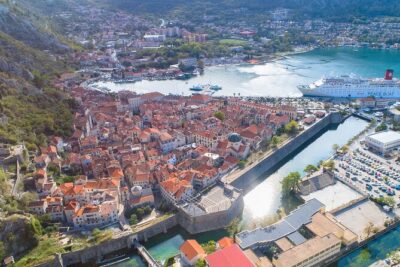
Private Kotor Walking Tour – Rick Steves Recommended
Read our review →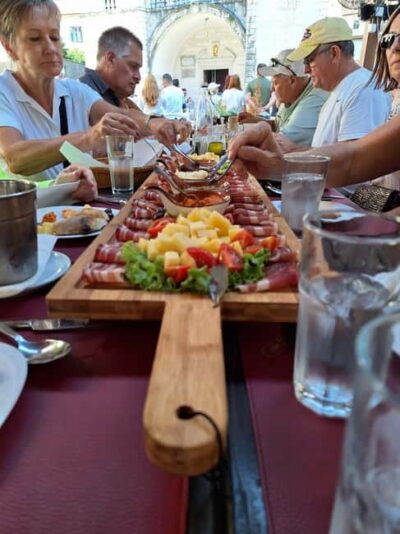
Private Walking Tour with Wine and Food Tasting
Read our review →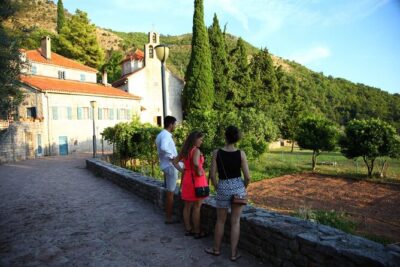
Great tour of coastal monasteries in Budva – Walking on the path of history!
Read our review →Browse the lists this tour appears in